STEP 01
Wedge it under the door
Push the wedge under the closed door until it is snug against the floor. It works on any inward-opening door with a hard floor or short carpet underneath.
A 120 dB alarm inside a steel door wedge. Slide it under the door, flip the switch, and anything that pushes the door sets it off. Hotel rooms, Airbnbs, share houses, dorms - anywhere a key exists that isn't yours.
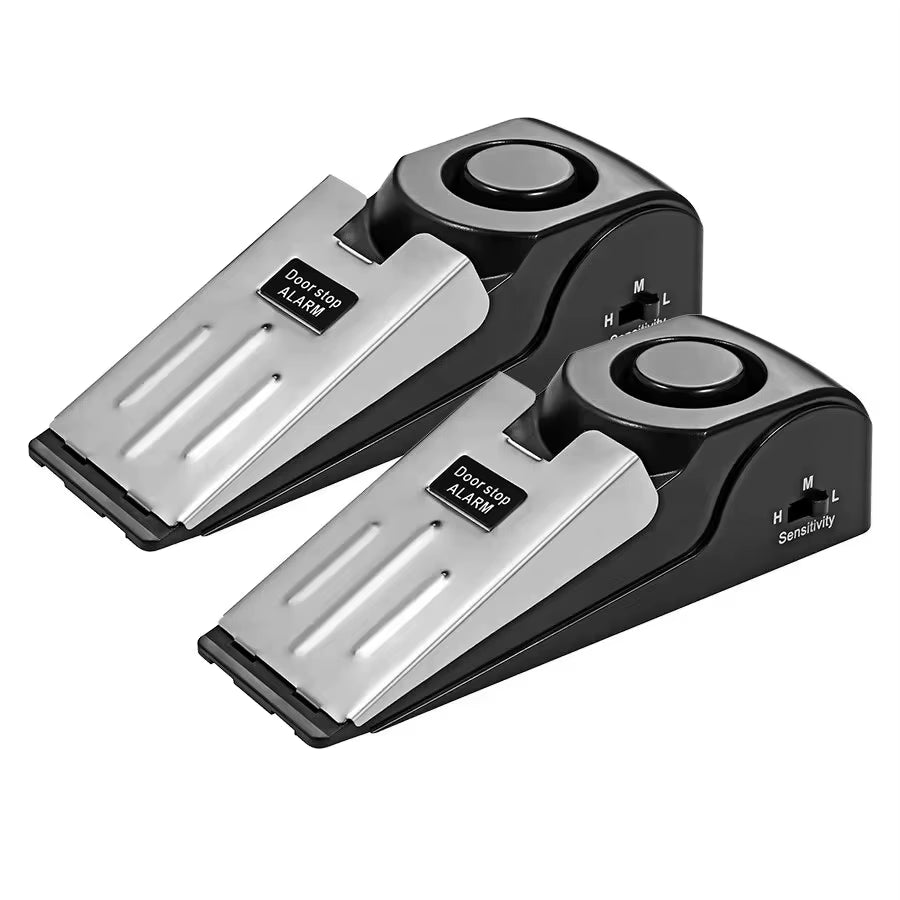
A hotel door, a rental, a room in a share house - you don't get to fit a bolt, and you often don't know how many keys exist. A wedge alarm is the one thing you can add to a door that isn't yours and take with you when you leave.
Push the wedge under the closed door until it is snug against the floor. It works on any inward-opening door with a hard floor or short carpet underneath.
One switch arms the alarm; a second sets high, medium or low. Low for a heavy apartment door that rattles, high for a light hotel door that barely moves.
Pressure on the wedge trips the vibration sensor and a 120 dB siren fires. Switch it off to silence it, switch it back on to re-arm. No reset, no app, no code.
It also works as an ordinary door stop with the alarm switched off. Each unit runs on one 9V battery, which is not included in the pack.
It fits any inward-opening door over a floor it can grip. That covers most of the places people feel least in control of a door.
Housekeeping, maintenance, the last guest, the owner - a lot of people can open that door. The wedge takes ten seconds and leaves no trace on the frame.
The point isn't stopping the door - it's never being the person a stranger opens a door on quietly. Small, flat, and packs in a carry-on.
You can't change the locks, and you don't know who held a key before you. Add an alarm you're allowed to add, and take it with you at the end of the lease.
Shared hallways, a door that doesn't lock properly, housemates' friends you've never met. One wedge on the bedroom door at night.
A back office after hours, a night shift, a caravan, a hotel room on a work trip. Anywhere being alerted matters more than being locked in.
Back doors, side doors, sliding patio doors and garage internal doors - the entries a burglar prefers because nobody's watching them.
No power, no signal and no network needed - it runs on a 9V battery for about a year. A sensible thing to have in a go-bag or a spare room.
Nothing to learn, nothing to charge, nothing to pair. Two switches and a battery - which is why it tends to actually get used.
Most portable door security either blocks the door or alerts you. A wedge alarm is one of the few that does a bit of both - which is the honest reason to pick it.
| Wedge alarm | Portable door lock | Door chain / latch | Chair under the handle | |
|---|---|---|---|---|
| Wakes you up | Yes - 120 dB | No | No | No |
| Physically resists the door | Yes | Yes | Yes | Somewhat |
| Needs fitting to the door | No | No | Yes - screws | No |
| Works in a hotel or rental | Yes | Usually | No | Yes |
| Alerts neighbours or the hallway | Yes | No | No | No |
| Fits in a carry-on | Yes | Yes | No | No |
| Needs a battery | Yes - 9V | No | No | No |
A wedge alarm pairs well with a portable lock rather than replacing it. If you already travel with one, the alarm is what adds the noise.
About the level of a chainsaw or an ambulance siren heard up close. Inside a hotel room or a bedroom it is genuinely startling, and it carries into a hallway. It is designed to be unpleasant enough that someone lets go of the door.
It needs a door that opens inwards, over a floor the wedge can bite into - tile, timber, vinyl, concrete or short carpet all work. It will not work on an outward-opening door, and it grips poorly on deep pile carpet or a very uneven threshold.
Yes - one 9V battery per unit, so two for the pack. Batteries are not included, because they cannot be shipped with every order. A battery lasts roughly a year on standby.
No. Nothing is screwed, glued or taped. The wedge sits on the floor and presses against the bottom of the door, so there is nothing to leave behind and nothing that puts a rental deposit at risk.
Yes. Turn the alarm switch off and it is just a heavy steel wedge holding a door open. That is useful when you are carrying things in and out.
It fits no hardware and modifies nothing, so it is generally fine where a door stop is fine. Check the rules where you are staying, and never block a door in a way that would stop you escaping in a fire.
The sensitivity switch. Set it low on a door that rattles in the wind or gets knocked, and high on a light door that would otherwise open too quietly to trigger it. Test the setting once before you rely on it.
It is a small steel wedge with a battery-powered buzzer, so it normally travels fine in carry-on or checked luggage. Rules differ by airline and country, so check yours - and pack the batteries according to your airline's battery policy.
Most people want one that stays at home on a back or bedroom door, and one that lives in a suitcase. A single unit also covers only one door, and most rooms worth alarming have exactly one.
Ten seconds to set, nothing to install, and nothing left behind when you check out. Remember to pick up two 9V batteries - they aren't in the box.
Secure checkout - shipping and taxes calculated at checkout